Shower service
Shower Tile Installation
Layout, setting and detailing — the part of the shower you look at every day.
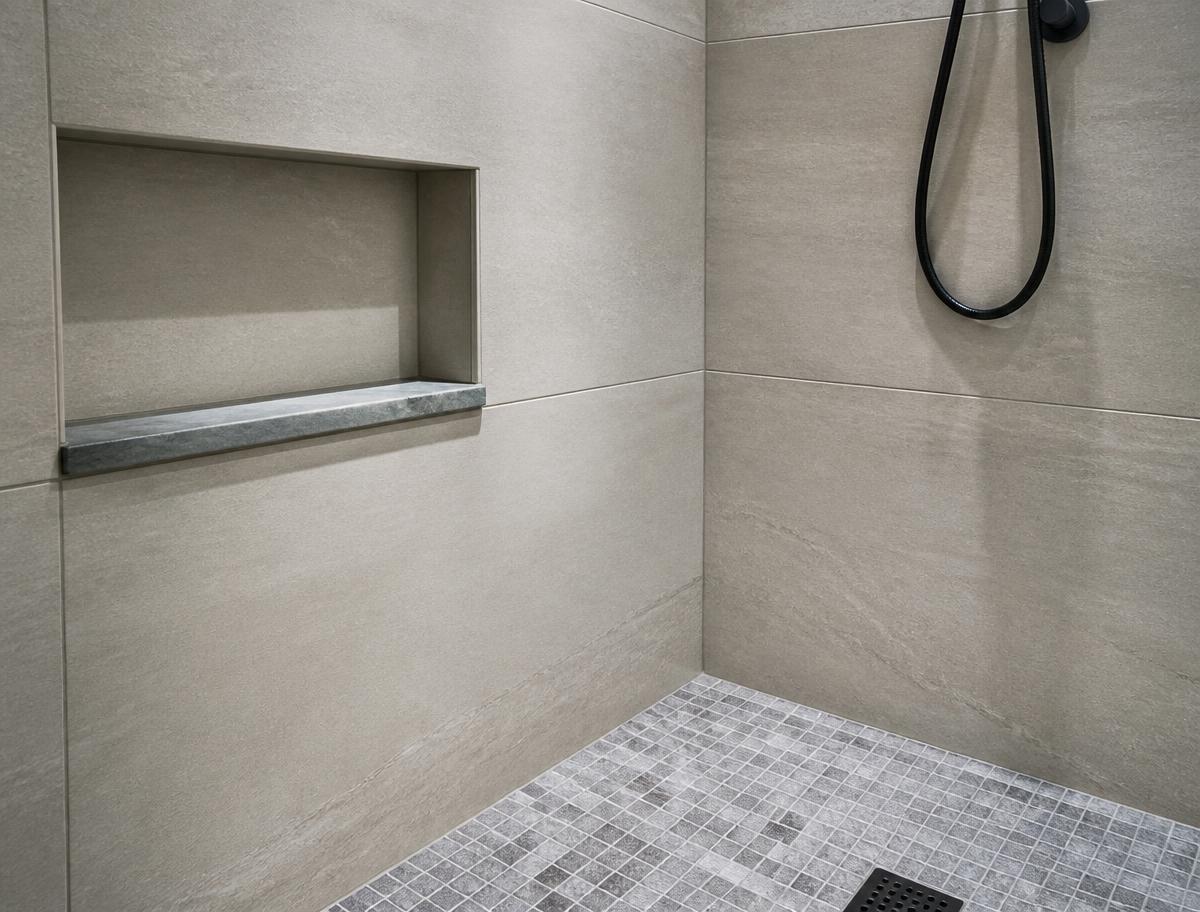
Short answer
Shower tile work covers substrate preparation, layout planning, setting, grouting and the trim details at every edge and change of plane. The difference between competent and excellent tile is decided before the first tile is set: where the layout starts, how cuts are distributed, and whether the niche and bench lines relate to the field tile.
Layout is decided before the first tile
Rooms are not square and walls are not plumb, so a tile layout is a set of decisions about where the inaccuracy goes. We dry-lay the wall, find the centerlines, and place cuts where they read as intentional — at inside corners and at the floor, rather than beside the niche or at eye level on the main wall.
- Full tiles kept at the most visible edge, cuts pushed to corners and the bottom course
- Niche interior sized to whole tiles or to the shelf material, so the opening does not fight the field
- Grout joints in the niche aligned with the surrounding wall joints wherever the sizes allow
- Bench top sloped roughly an eighth of an inch per foot so water leaves rather than pools
- Offset patterns kept to a third rather than a half on long planks, which reduces lippage
Choosing tile that survives a shower
| Material | Notes for shower use |
|---|---|
| Porcelain | Low absorption and hard-wearing; the default for both floors and walls |
| Ceramic | Fine on walls; check the rating before using it on a shower floor |
| Natural stone | Beautiful but porous — needs sealing on a schedule and dislikes acidic cleaners |
| Mosaic on floors | More grout joints means more grip underfoot, which is why small formats suit shower pans |
| Large-format panels | Very few joints and easy cleaning; the substrate has to be genuinely flat |
Grout, sealant and the maintenance you inherit
Every change of plane — inside corners, the wall-to-pan joint, around the bench — gets flexible sealant rather than grout, because those joints move. Grouting a moving joint is why grout cracks reappear in exactly the same place after every repair.
Water in much of the Treasure Valley is on the hard side, so mineral film on glass and tile is a routine cleaning issue rather than a defect. A squeegee after showering and a non-acidic cleaner will do more for the look of a stone or grouted shower over ten years than any sealer product will.
Shower tile — questions
- How long does tile need to cure before we can use the shower?
- Plan on the shower being out of service for a few days after grouting. Exact times depend on the setting materials, the grout and the humidity in the room, and we give you the specific figure for the products used in your shower.
- Do you seal grout?
- Cement-based grout is sealed after it cures. Epoxy grout does not need sealing but is less forgiving to install and to repair later. We will tell you which one your shower is getting and why.
- Can you match existing tile for a repair?
- Sometimes, if the line is still produced and you have attic stock. Discontinued tile and shade variation between production runs mean a repair is often visible, which is worth knowing before choosing repair over replacement.
Shower tile by city
- Shower Tile Installation in MeridianTile is the part of a Meridian shower everyone sees and the part that most exposes what is underneath it. Our tile work here is mostly large-format porcelain in master baths, which means the substrate flattening matters more than the tile setting.
- Shower Tile Installation in BoiseTile work in Boise has to suit the house. A stacked large-format layout that looks right in a Harris Ranch master looks wrong in a 1920s bungalow, and it also exposes every out-of-square wall in a pre-war bathroom.
- Shower Tile Installation in EagleEagle is where most of our large-format and slab-look tile work happens. At 24x48 and larger, tile becomes a substrate job first — a wall out of plane by an eighth of an inch shows as lippage across a panel that size.
- Shower Tile Installation in StarMost Star tile work is a first upgrade out of a builder finish, so the priority is getting a durable, well-detailed shower that does not look like the six other homes on the street — usually with a larger field tile, a real niche and a considered accent.
- Shower Tile Installation in NampaTile in Nampa is usually about getting a durable, well-set finish in a modest footprint. Small bathrooms are unforgiving of layout mistakes, because every wall is in the sight line and there is nowhere to hide a cut.
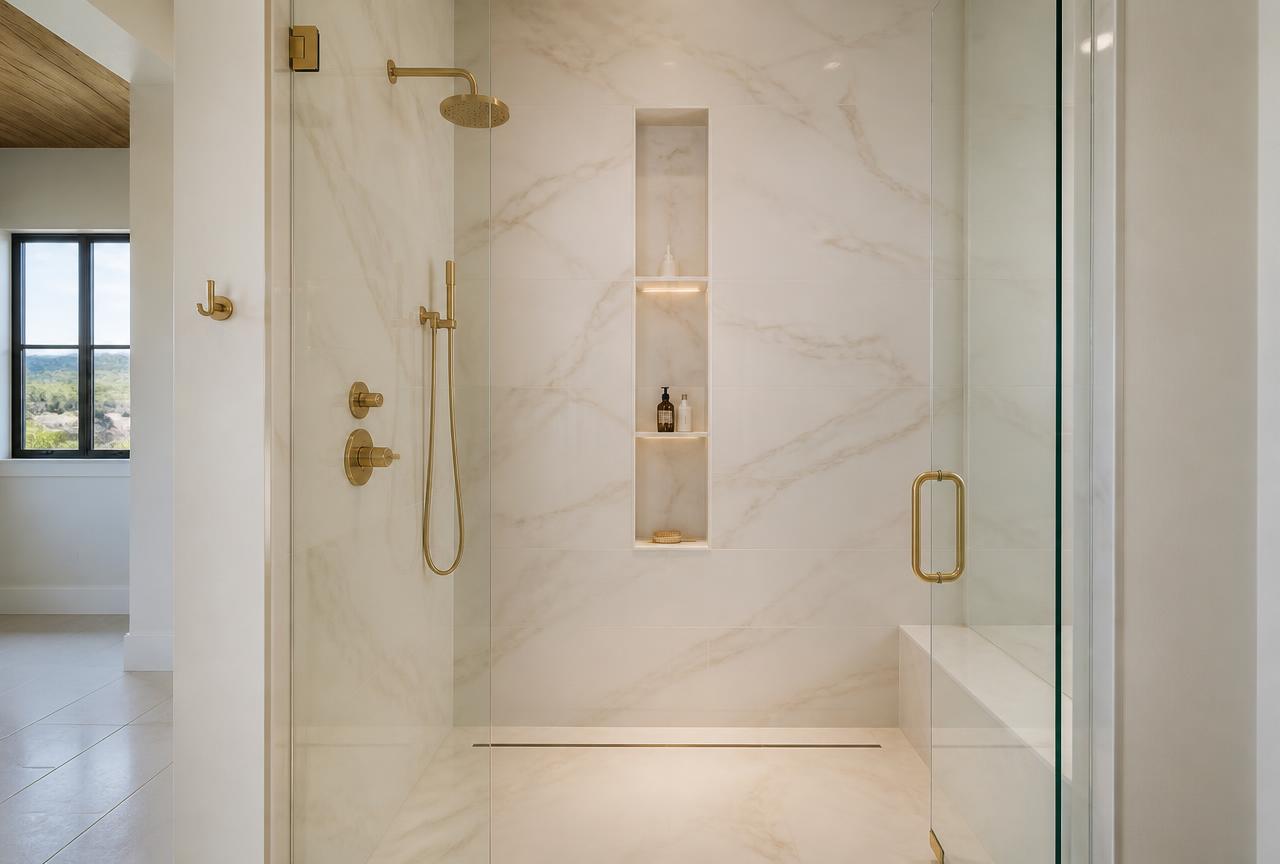
Shower tile case studies
Related shower services
Shower Remodeling
Replacing a tired, leaking or dated shower with a new wet area built on a complete waterproofing system.
Read about shower remodelsShower Waterproofing
The membrane, pan and detailing work that decides whether a shower lasts five years or thirty.
Read about waterproofingWalk-In Showers
Low-curb and curbless showers with the slope, drainage and blocking planned for long-term use.
Read about walk-in showers
Shower tile near you
Talk through your shower tile project
Tell us what the room is doing today and what you want instead. We follow up to arrange a walkthrough and a written estimate.