Shower service
Shower Waterproofing
The membrane, pan and detailing work that decides whether a shower lasts five years or thirty.
Short answer
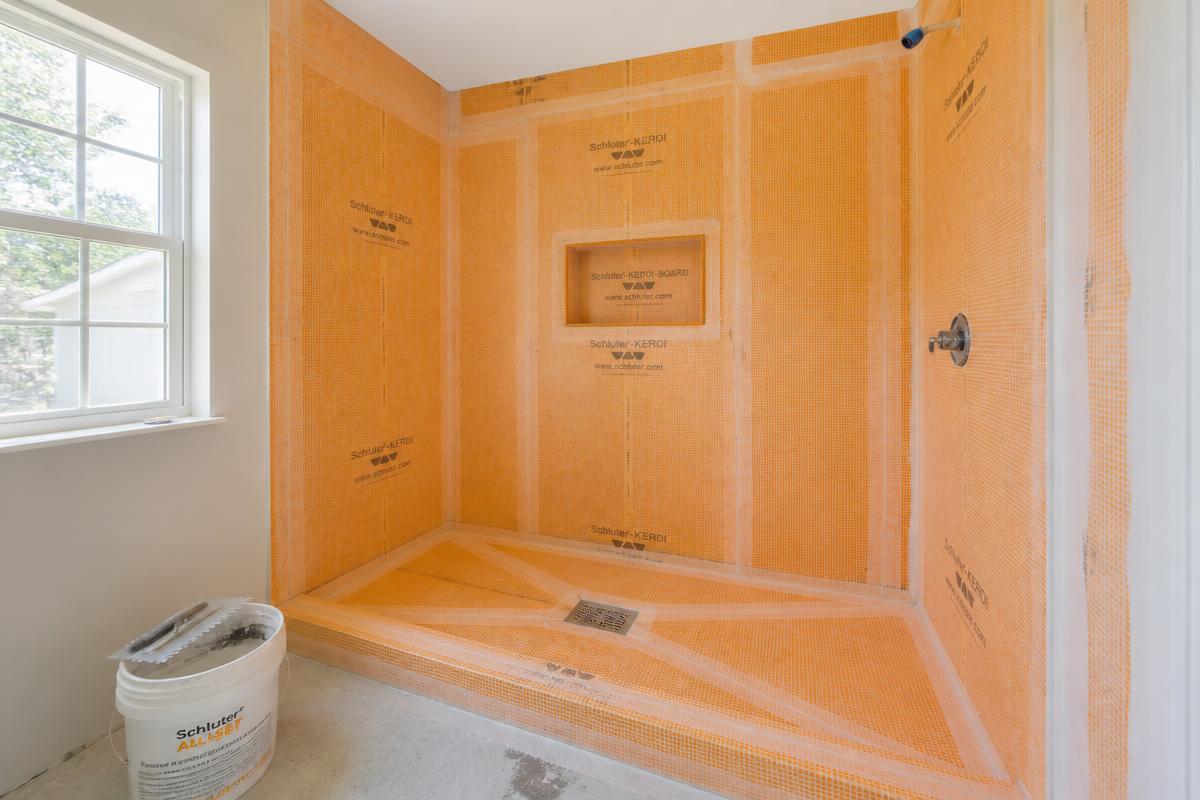
Shower waterproofing is the continuous barrier installed behind the tile, across the pan, over the curb and through every corner and penetration. Modern systems use either a bonded sheet membrane, a liquid-applied membrane or foam backer boards with sealed seams. The system matters less than the continuity: a single unsealed corner or an unsealed valve penetration defeats the whole assembly.
The three systems in common use
| System | How it works | Where it fits |
|---|---|---|
| Bonded sheet membrane | A sheet is bonded over the substrate with thin-set, seams overlapped and banded | The most forgiving option for complex shapes, niches and benches |
| Liquid-applied membrane | Rolled or troweled in multiple coats to a specified thickness, with fabric at corners | Efficient on simple layouts; thickness must be checked, not assumed |
| Foam board system | Waterproof boards replace backer board, with seams and screws sealed | Fast, light, and well suited to curbless pans and benches |
We do not mix components between manufacturers within a single assembly. Systems are tested and warranted as a set, and combining a membrane from one brand with a drain flange from another is one of the more common reasons a manufacturer walks away from a claim.
Where showers actually leak
- 1The curb — the most stepped-on, most flexed part of the assembly, and often the least detailed
- 2Inside corners, where movement concentrates and a rigid membrane cracks without a fabric band
- 3The valve and shower-arm penetrations, if they are not individually sealed
- 4The drain flange connection, where the membrane must clamp or bond to the drain body
- 5Bench tops, which need slope and a wrapped front edge, not just tile
- 6The transition from the pan to the bathroom floor at a curbless entry
A leak that shows up on a downstairs ceiling has usually been running for months. The stain is downhill from the failure, not below it — tracing it back to the actual entry point is part of the diagnosis.
Testing before tile goes on
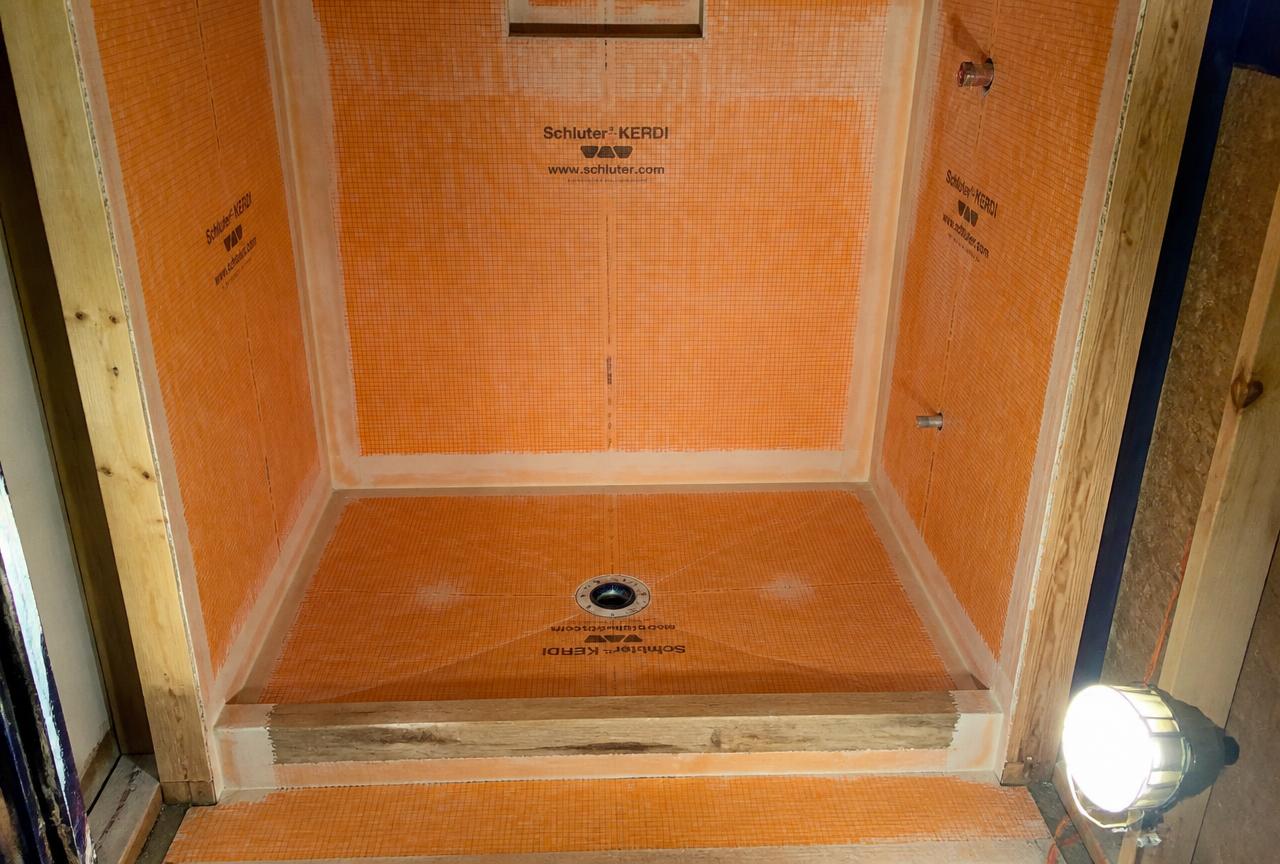
The only honest way to know a pan holds water is to fill it with water. We plug the drain, flood the pan and leave it, then check the level and look underneath where access allows. It costs a day. Discovering the same information after the tile, the glass and the trim are installed costs the whole shower.
Waterproofing — questions
- Is grout or sealer waterproof?
- No. Grout and grout sealer slow water down and keep the surface cleaner, but water passes through both. Waterproofing is the membrane layer behind the tile.
- Can you waterproof a shower without removing the tile?
- Not in any way that lasts. Surface-applied coatings over existing tile are a temporary measure at best; if the substrate behind is already wet, sealing the surface traps the moisture in the wall.
- How do you know the shower does not leak before tiling?
- We flood-test the pan and hold it, then inspect for level change and for moisture below where the structure is accessible, before any tile is set.
Waterproofing by city
- Shower Waterproofing in MeridianMeridian showers are young enough that outright pan failures are less common here than in older parts of the valley — what we see instead is builder-grade waterproofing reaching the end of its life, usually announced by grout that keeps cracking at the corners or a soft spot at the base of the wall.
- Shower Waterproofing in BoiseBoise is where we find the most genuinely failed showers in the valley, because much of the housing is old enough that the original waterproofing has aged out and been tiled over at least once. When we open a Boise shower, we expect to find a previous remodel rather than original construction.
- Shower Waterproofing in EagleEagle showers fail less often from age and more often from ambition — large wet areas, curbless entries, benches and niches all add details, and details are where waterproofing systems get broken by whoever installed them.
- Shower Waterproofing in StarStar's homes are new enough that outright pan failures are uncommon, but builder waterproofing details vary widely, and the ones we do open up are usually failing at the curb, the corners or a fastener line rather than in the middle of the pan.
- Shower Waterproofing in NampaNampa's older housing produces the classic failure we see most often: a stain on a ceiling or a soft floor outside the bathroom, traced to a mortar-bed pan sitting on a liner that gave up years ago. Those showers get rebuilt, not patched.
Waterproofing case studies
Related shower services
Shower Remodeling
Replacing a tired, leaking or dated shower with a new wet area built on a complete waterproofing system.
Read about shower remodelsShower Tile Installation
Layout, setting and detailing — the part of the shower you look at every day.
Read about shower tileWalk-In Showers
Low-curb and curbless showers with the slope, drainage and blocking planned for long-term use.
Read about walk-in showers
Waterproofing near you
Talk through your waterproofing project
Tell us what the room is doing today and what you want instead. We follow up to arrange a walkthrough and a written estimate.